


Research initiatives

Zum Wohle der Patient*innen.








Research at the Department of Urology covers a wide variety of subspecialties. In recent years, one clear focus has been on uro-oncological research, not least because of rapid advances worldwide in drug therapy for tumors that have metastasized. This applies to cancerous tumors of the prostate, kidney, bladder, penis and testicles.
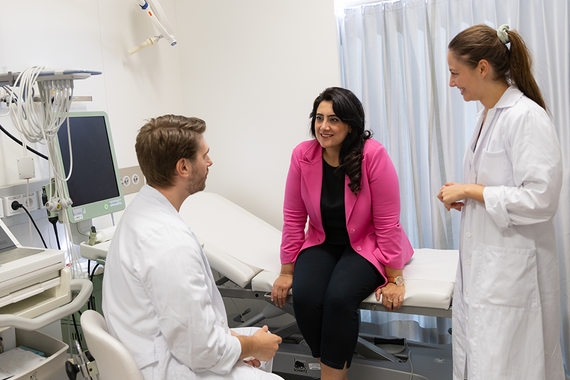
As part of our research activities, we can also enable our patients to participate in international studies with promising and innovative therapeutic approaches.


The MoonRISe-1 trial targets patients with intermediate-risk non-muscle-invasive bladder cancer (IR-NMIBC) who are FGFR-positive. In this trial, an intravesical TAR device is being prospectively and randomly tested against the standard of care (MMC).
We were able to enroll a total of 11 patients (2 in the TAR group, 9 in the MMC group), making us the leading center in Austria.
VEKTOR is a prospective, randomized, single-center non-inferiority study that directly compares the surgical procedures TUR-P, HoLEP, and Rezūm™ for the treatment of BPS. The aim is to compare the efficacy, safety, and impact on quality of life, sexual function, and reoperation rates of these three procedures. The target population consists of all patients with BPS who are candidates for surgery and have a prostate volume of 30–80 ml.
PJBCa is used to systematically track the course of the disease in patients with urothelial carcinoma in order to improve diagnosis and treatment decisions.

StrikeBC ist eine österreichweite Kollaborationsinitiative im Rahmen der LBG-Klinischen Forschungsgruppen mit dem Ziel, die Versorgung und Forschung bei fortgeschrittenem Blasenkrebs durch innovative klinische Studien, translationale Forschung, moderne Datenintegration und eine strukturierte Forschungsplattform nachhaltig zu verbessern. Das Netzwerk vereint Expert*innen verschiedener Fachrichtungen aus Universitätskliniken und Forschungsinstituten in ganz Österreich, um neue Diagnose-, Biomarker- und Therapiestrategien sowie patientenzentrierte Entscheidungsmodelle zu entwickeln und zu evaluieren. Ein besonderer Schwerpunkt liegt auf der aktiven Einbindung von Patient*innenvertretungen sowie auf der Förderung effizienter, datengetriebener Forschung und der Ausbildung der nächsten Generation von Forscher*innen.
Weitere Informationen hierzu finden Sie unter